

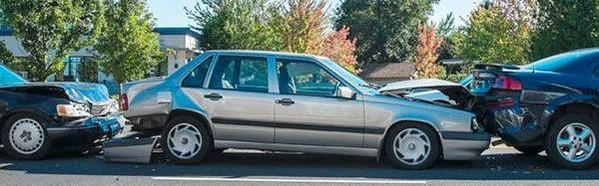

Recently, we often see vehicles which are equipped with the emergency brake. It looks very useful, but the performance of the emergency brake is completely different between auto makes. In this article, you will see what the emergency brake is and what the difference is.
What the emergency brake is
Emergency brake is a new function which uses sensors/cameras to assist braking. The sensors and cameras detect pedestrians, bikes, and obstacles. Emergency brake assists the braking action when you drive without attention. Drivers are able to avoid dangerous situations and make the risk minimum.

In these 2-3 years, the emergency brake system has continued to evolve. The cameras and radar are improved dramatically. Few years ago, cars with the emergency brake had been equipped with a stereo camera calibration, monocular cameras, millimeter wave radar, infrared lasers or combination of these.
However current models have a stereo camera calibration, monocular camera and millimeter wave radar,these two cameras which can detect obstacles in any situation, and also millimeter wave radar can detect invisible obstacles. The front camera used to be limited to detect vehicles or obstacles ahead. Now these cameras are improved to detect pedestrians, bicycles, and motorcycles, and even people working at night.
The performance of emergency brakes are completely different between auto makers.
The operation depends on the condition such as day or night, low speeds or high speed, and so on. Let’s compare the emergency brake of Japanese automakers.

“Pre-crash Safety” TOYOTA
“Toyota Safety Sense” includes the “Pre-crash Safety” emergency brake function.
This system uses a monocular camera and millimeter wave radar to detect oncoming vehicles and pedestrians crossing the road. Also “Toyota Safety Sense” is able to detect dangerous situations at night in both low and high speed ranges.

“CMBS” HONDA
Honda’s safety package is called “Honda Sensing”. One of the functions is called “Collision Mitigation Braking (CMBS)”, which has been improved to detect not only vehicles, but also bicycles during the day time and pedestrians walking at night. The package also includes a lot of safety features, such as lane keep support, pedal misapplication prevention, and auto high beams.

“Intelligent Emergency Brake” NISSAN
Nissan’s emergency brake function is called “Intelligent Emergency Brake”. When the system judges that there is a risk of collision in front, the system automatically activates the weak brake with an alert to let the notice the risk. After that the system activates the strong brake to avoid the collision if the driver did not take any actions.

“SCBS & SBS” MAZDA
Mazda’s current models are equipped with SCBS(Smart City Brake Support) & SBS (Smart Brake Support). While driving at low speeds about 4 to 30 km/h, the system uses a near-infrared laser sensor installed on the windscreen to detect the vehicle ahead. It automatically controls the brakes, when there is a high risk of collision in front.
When the driver presses the brake pedal, the system immediately applies strong braking force if necessary. If the driver does not press the brakes, the system automatically activates the brakes to avoid the risks.

“Eyesight Pre-crash Brake” SUBARU
“EyeSight” (Subaru’s driving support system) includes the “Pre-crash brake” with stereo cameras on the windscreen.The system detects vehicles, pedestrians and bicycles in front. It automatically activates the brake to decrease the damage. The system is also equipped with backward brake assist. It also avoids a collision with obstacles behind when reversing.

“FCM FCM-City” MITSUBISHI
There are 2 types of Mitsubishi’s emergency brake systems; “FCM” is activated during normal driving, and “FCM-City” is activated during low-speed driving.
Both of these systems operate for the vehicle in front. When the distance between you and the vehicle in front is closed, the system helps you to avoid the collision and reduce damage with the brake assist.
How we choose the emergency brake
The performance of emergency brakes are completely different between automakers. When you choose the vehicle equipped emergency brake, you should see these difference;
Whether it works at night or not?
Does it cover wide speed ranges?
Able to detect not only vehicles in front also pedestrians and bikes?
In December 2019, the Ministry of Land, Infrastructure, Transport and Tourism (MLIT) in Japan announced that emergency brake will be mandatory for all new models after November 2021, and also existing models by December 2025. As for import vehicles, the emergency brake will be mandatory for all new models after July 2024, and also existing models by July 2026. When will an emergency brake be required in your country?
Follow us to drive
